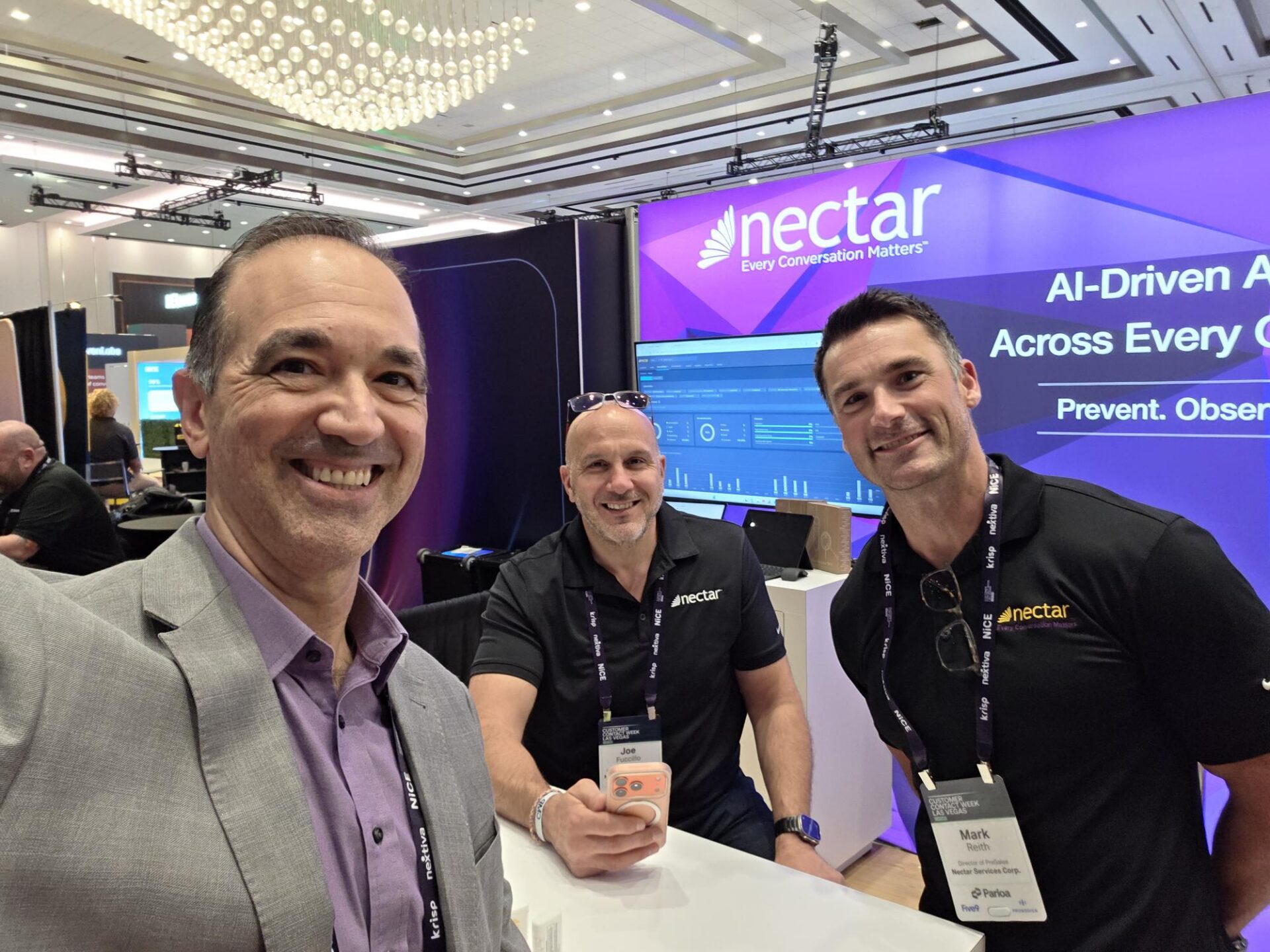
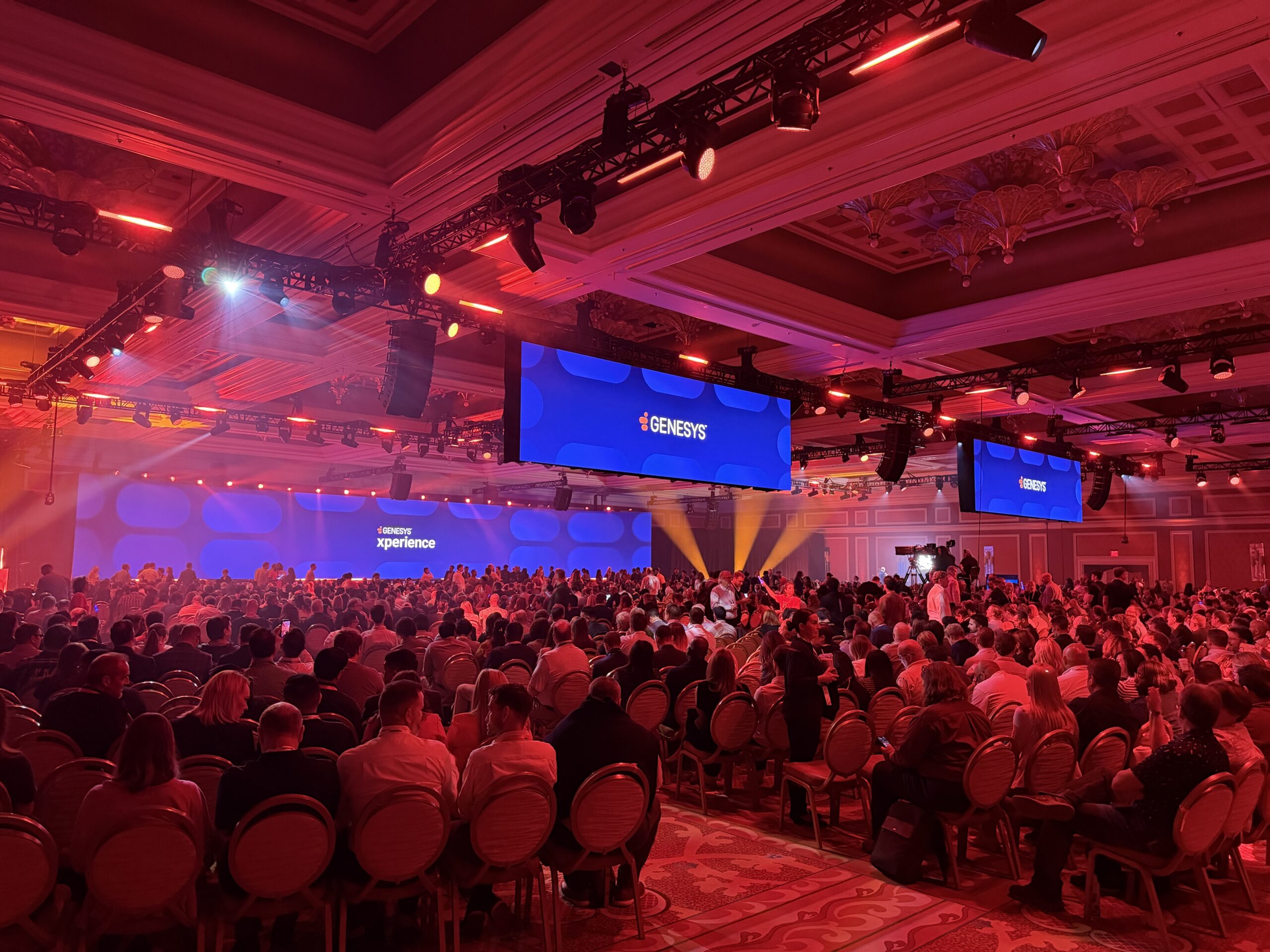
We’re back from Genesys Xperience 2026, where Joe, Shane, Jamie, and Mark spent three days talking with CX leaders and Genesys Cloud customers—in sessions, on the Orchestrators Hall floor, over breakfast, and at the parties!
Agentic AI was everywhere, as you’d expect. But some of the conversations that stayed with us had less to do with what AI can do next and more to do with what teams need to see right now.
- How do we see the full customer journey?
- How do we know whether our remote agents are equipped to deliver a good experience?
- And when something goes wrong, can we see enough of the path to understand what actually happened?
Those questions came up again and again.
The Customer Journey Was the Conversation
If there was one phrase we heard more than any other, it was “the full customer journey.”
CX leaders don’t just want to know that an interaction happened. They want to understand the path that customer took. And increasingly, that journey includes both AI and people. An interaction might start with an IVR, move through an AI bot, touch multiple systems and pieces of infrastructure, and eventually reach a human agent. Teams want visibility across that entire conversation—not just the pieces that happen inside the contact center platform.
More than one conversation turned into some version of:
“Wow. Nobody else gives us this kind of visibility into the entire customer journey.”
That reaction stood out because the customer experience doesn’t belong to any one system. A customer doesn’t experience your SBC, your contact center platform, your network, an AI bot, or an agent’s endpoint separately. They experience one conversation.
And when that conversation doesn’t go well, they expect you to understand why.
Cloud Changes What You Can (and Need) to See
We also heard something that may be familiar to organizations that have moved (or are moving!) to the cloud: the feeling of flying blind both during and after migration.
Not necessarily blind to what’s happening inside the contact center platform. Blind to everything happening around it.
And for organizations still in the process, migration itself can create another layer of uncertainty. Are call flows and routing working as expected? Are integrations behaving the way they should? Is the experience customers and agents rely on actually going to work the same way after the move?
That’s where communications observability and assurance throughout the migration, not just at go-live, can help reduce the risk of discovering problems after the switch.
That need for visibility becomes even more pronounced with a distributed workforce. When agents are working from home or across different locations, their device, headset, Wi-Fi, ISP, and local network can all become part of the customer experience.
The question isn’t simply, “Is Genesys Cloud healthy?”
It’s “What happened across the entire path of this interaction?”
That’s where a broader observability view becomes valuable.
By bringing visibility across the customer journey, including the SBC and agent endpoint, teams can connect the dots between the experience a customer had and what was happening underneath it.
Agent Health Is Customer Experience
Teams want to understand what might be affecting an agent’s ability to deliver a good conversation. Is the device healthy? Is the headset working properly? Is the connection stable? Is something happening on the agent’s home network?
Because an agent can be perfectly available in the contact center platform and still have a poor experience delivering that interaction.
That makes agent visibility more than an IT concern. It’s part of CX.
There’s another potential blind spot here, too: the agent’s browser. For browser-based agent desktops and calling, what’s happening in the browser can directly affect the interaction. Nectar captures browser console and network information alongside the rest of the conversation data, giving teams another layer of visibility when something goes wrong.
It also means the information teams may need when opening a Genesys support case is already available, rather than asking an agent to reproduce the problem and then trying to collect the right information after the fact.
The same is true on the infrastructure side. SBC visibility can provide another important piece of context when teams are trying to understand why a call didn’t go as expected.
More Visibility, More Context
One of the things that generated the strongest reactions at Xperience was seeing these pieces together. That’s the value of observability: bringing the different pieces of the conversation together so teams have the context to understand what happened, not just a collection of individual alerts, metrics, and logs.
- Customer journey data.
- Agent health.
- SBC visibility.
- Agent browser visibility.
- And the information teams need (we make the sys logs readily available) to dig into what happened.
The point isn’t to replace the visibility teams already have in Genesys Cloud. It’s to extend the picture beyond the platform so teams can see more of the environment that contributes to the customer experience.
The Takeaway
Genesys Xperience 2026 was rightly focused on what agentic AI can make possible. But for us, the conversations that stuck were about what has to happen underneath it all.
For organizations building the next generation of customer experiences on Genesys Cloud, having that broader view can mean the difference between knowing that something went wrong and knowing what happened, where it happened, and why.
That’s the kind of visibility Nectar is built to provide. We’d love to show you!